Sunday, January 25, 2015

The lousy samaritan

Just before Christmas I found myself hurrying home for, to be honest I don't remember what, when I got stopped by a red light. There, in spite of the cold, on the grassy median, was a man with a cardboard sign begging. His sign indicated that he was willing to work for food. My first thought was, "Do I have any money or perhaps a Chipotle gift card?" I have been taught by my children that when you see someone begging you should give. But before I checked my wallet, and besides I was in the wrong lane to help, the light turned green.

As I drove away, I had a fleeting thought that I could turn around, park across in a nearby lot, cross the street, and find out that man's story. I'm sure I could have helped him somehow. But a quick excuse--my fingers freeze at about 45 degrees (thank you Raynaud's) and it was way below that--and I was on my way.

I have reflected on this experience several times since then. The Lord I realize now was testing me. And I failed.
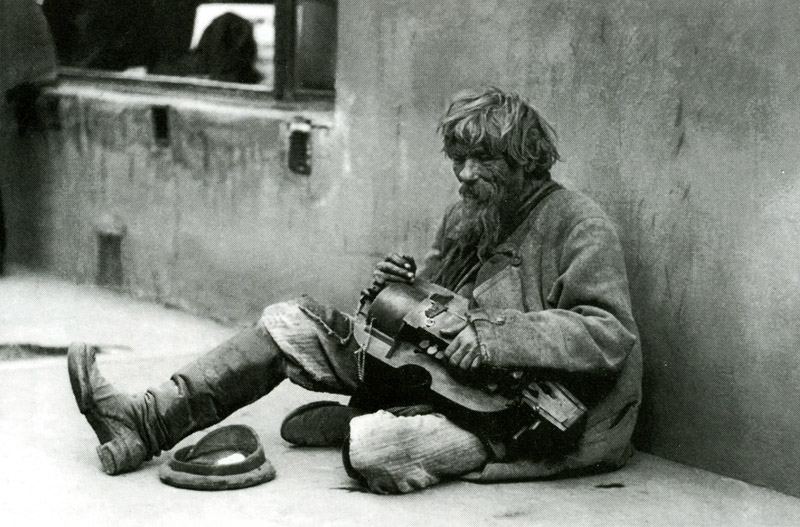


Sometimes when reading the story of the good Samaritan I have judged the "certain priest" and "Levite" who passed by on the other side of the road. Intellectually I could say, "There's a little more priest in me than I would like to admit." But now if I am being completely honest, I must see myself in their shoes. (Not so much the Levite's who "came and looked on" the wounded man before passing by on the other side; I am more like the certain priest who merely passed by.)

(Incidentally for an interesting examination of the parable of the Good Samaritan, I recommend Daniel K. Judd's BYU devotional on mental health. (Alas the text is not available, so you have to listen to it.) The last few minutes he reviews this parable. I had never thought of asking myself if I was like the host who was willing to help, but only for a price.)

I want to be the kind of man who crosses the street to help another in need. So I guess this is something of a confession. I make a lousy Samaritan. Hopefully the Lord will forgive me for my priestly behavior.

Sunday, January 18, 2015

2 Nephi 5:10

And we did observe to keep the judgments, and the statutes, and the commandments of the Lord in all things, according to the law of Moses.

Why does Nephi not simply say, "And we kept the commandments?" What does adding "we did observe to keep the commandments" imply? Perhaps from this semi awkward phrasing we are supposed to learn that truly keeping the commandments requires a watchfulness, a mindful attitude of recognizing what we are doing and why. Adam and Eve were certainly keeping the law of sacrifice when the offered the firstlings of their flock. But the Lord was not content with leaving them in the dark about why He had given them this law. Thus He sent an angel to instruct them. So I find myself wondering, "Am I mindful of the commandments as I kept them? Am I waiting on the Lord to give me further light and knowledge as I keep the commandments or am I just obeying out of habit (which is probably better than not, but is it what the Lord wants)?"

From this verse we also need to ask why Nephi said they kept the judgments, statutes, and commandments? Again, why didn't he just say, "And we kept the commandments?" How are these three things different. I admit, after comparing usage and definitions from several dictionaries, I'm flummoxed.

Judgments seems to be the law as given by the Lord (our judge). Statutes are written laws. Commandments are divine decrees.

Perhaps they are just three ways of saying the same thing. So why list all three?

Tuesday, January 6, 2015

2 Nephi 2:1-3

Tonight my reading was 2 Nephi 2. I didn't get very far. I wonder if we should learn anything from the verb tenses in the first three verses, especially the first two. Those are about afflictions, a subject unfortunately near and dear to my heart.

I find it interesting that Jacob "hast suffered afflictions" meaning he had suffered (past tense), but that God "shall consecrate" his afflictions for his gain, meaning the suffering would benefit him (future tense). Often when we suffer we don't recognize an affliction as a blessing. A lot of cheap self-help and smarmy sacrament meeting talks teach that in our suffering we should try to find the lessons in our agony; look for the proverbial silver lining. Trying to find good in pain may help keep our attitude in check, but when we face trials perhaps we would be better off just admitting that our life stinks, accept it, and... that's it. No searching for hidden treasures or sacred meaning in our trials; God hasn't yet consecrated our trials for our gain. They're still just trials. This need not be pessimistic, We can recognize the awfulness of our situation and at the same time reassure ourselves that some day (i.e., not now) God will make something good out of our pain... and just move on.

I also find it interesting that in verse 3, Lehi says to Jacob, who is only a young man, "thou art redeemed" (present tense). I wonder what this says about redemption. Often we think of redemption coming only after final judgement and worse "after all we can do". Perhaps redemption is a state of being that we should strive for today and every day. (Tying the three verses together, I imagine that knowing today you are redeemed would aide in enduring challenges that arise today.)

I admit I don't know how we get to that knowledge/feeling/state of being of redemption today, but am heartened that Jacob was redeemed because of the righteousness of Jesus Christ and not because of anything he had done. That recognition of the source of our redemption is probably the first step.


Thursday, December 18, 2014

On the only true church... and cookies

In a typical testimony meeting of The Church of Jesus Christ of Latter-day Saints, we often hear, "I know The Church is true." This is shorthand for "the only true and living church upon the face of the whole earth, with which I, the Lord, am well pleased" (D&C 1:30). I wonder, "Is our 'only true church' reduction sloppy thinking?"

Suppose last week I told you, "Oreos are the only black and white cookie upon the face of the whole earth, with which I am well pleased".

There are several reasons you can't reduce this to "Oreos are the only black cookie" First, Oreos are not black cookies; they are black and white cookies. Second, Oreos are not the only black cookies. In fact, other cookies may better fit the "black cookie" description.


The same goes for white cookies.


In fact, we run into a similar problem when we claim Oreos are the only black and white cookie. Hydrox claims to be the first creme-filled cookie and there are other Oreo knock-offs which are no less black and white than your typical Oreo.


If the reducing our statement about cookies to "Oreos are the only black cookie" is inaccurate, could it be that the "only true church" reduction is no less problematic? The more I learn about other faiths, the more I recognize the truths within them. I have no trouble saying both the other churches are true AND declaring the Church is the only true and living church of which the Lord is well pleased.


Side note: I would never claim Oreos as the only black and white cookie of which I am well pleased.

"If people would only look to the cookie, all our problems would be solved."


Thursday, December 4, 2014

1 Nephi 9

for the plates upon which I make a full account of my people I have given the name of Nephi; wherefore, they are called the plates of Nephi, after mine own name; and these plates also are called the plates of Nephi. --1Nephi 9:2

Is it just me or does Nephi's duplicative naming scheme seem like a roadshow sketch waiting to happen?

Sunday, November 30, 2014

1 Nephi 1 to 7

In this day and age of process reengineering and Six Sigma, the story of Lehi's flight into the wilderness and Nephi and his brothers subsequent return (not once but twice) to Jerusalem, I can't help but wonder, "Couldn't God have done this more efficiently?" Surely He could have gotten Lehi's family along with Ishmael and the plates of brass out of Jerusalem in fewer steps.

But then what is my wisdom compared to the Lord's? I have noticed several blessings that resulted from the seemingly inefficient manner in Lehi's exodus.

First and most obvious, Sariah's faith was strengthened by her sons first return to Jerusalem. 1 Nephi 5 makes it plain that up to that point Sariah's confidence in her husband's visions had been somewhat shaky. It seems she may have been just going along with her husband's hair-brained schemes. The safe return of her children with the plates, as Lehi prophesied, helped her recognize her husband was not just following the vain imaginations of his heart.

Second, the seemingly inefficient manner the plates were obtained resulted in the addition of Zoram to the band of travelers. Zoram was able to take one of Ishmael's daughters to wife, diversifying the Nephite gene pool.  Without Zoram, the eldest daughter of Ishmael may have ended up the old maid of the new world. Or worse, without Zoram as an additional suitor, Nephi and his brothers may have been unsuccessful in persuading Ishmael to leave Jerusalem. It seems that Zoram also acted as a good friend for Nephi, which given his older brothers recalcitrance must have been most welcome.

In the first journey back, Nephi also obtained the sword of Laban. This then, once they reached the Americas, the Nephites used as a model for weapons as protection against the Lamanites.

I also wonder if Nephi and his brothers losing to Laban all of their father's gold and silver and precious things made it easier for Laman and Lemuel to leave Jerusalem. Perhaps the draw of these precious things would have been too great for Laman and Lemuel when they, together with a few of Ishmael's daughters, rebelled and threatened to return to Jerusalem.

But I'm now speculating... The one thing I take away from all of this is what may appear inefficient to my mortal eyes may actually be the most efficient way for the Lord to achieve his many diverse purposes.

A fresh start

At the Sunday session of Stake Conference a few weeks back I totally had a difficult time paying attention. Between the 2 hours of leadership session and 2 hours of the "adult" session the day before, I was just done. My wife and I had stayed up too late the night before but I'm sure that had nothing to do with my inability to focus. ;)

In spite of my (non)spiritual ADD, the Spirit did manage to leave one impression with me. I need to be better about studying (not just reading) the scriptures. To that end I decided to revive this blog. In college I learned that writing out my thoughts helps distil my thinking and crystalize any insights I may have. If I can't express an idea clearly in words, the idea could use a little refining.

To aide in my studies I bought James E Faulconer's The Book Of Mormon Made Harder. (I took Hegel from Dr. Faulconer in college. He was a great teacher.) I imagine sometimes my posts will use those questions as jumping off points or I may just share random thoughts that come to my mind while studying (like my next post on the first few books of Nephi). At the end of the day, I just want to capture my impressions in a place where my kids can one day profit from.